


Direct answer
A gutter system is part of the home’s water-control system. Poor installation details can turn a cheaper gutter job into a future repair problem.
A gutter may look simple from the ground
To a homeowner, a gutter may look like a piece of metal along the edge of the roof. To some builders, it may look like a small finishing detail. Even in the trades, some people treat gutters like they are not a major part of the home.
We hear it all the time: “It’s just gutters.”
That sounds simple, but it is the wrong mindset.
A gutter system is part of the home’s water-control system. Its job is to collect roof runoff and move that water away from the home without creating new problems at the fascia, roof, siding, foundation, crawlspace, basement, walkways, landscaping, or lower roof sections.
That matters because a roof can shed a lot more water than most people realize. N.C. Cooperative Extension’s Caldwell County Center notes that a 1-inch rainfall event on a 1,000-square-foot rooftop can produce about 623 gallons of water. NC DEQ gives a similar North Carolina rule of thumb: about 600 gallons from a 1-inch rain on 1,000 square feet of roof.
That water has to go somewhere.
A good gutter system controls where it goes.
A poor gutter system may spill it, trap it, push it behind the gutter, send it into the fascia, dump it onto a lower roof the wrong way, create unnecessary seams, clog at a bad detail, or even create a roof leak where there should have never been a roof penetration in the first place.
That is why gutters are not “just gutters.”
The cheapest gutter job is not always the lowest-cost gutter job
We understand that homeowners compare prices. They should.
Nobody wants to overpay. Nobody wants to feel like they paid more than they had to. But gutter quotes are not always equal just because both quotes say “gutters.”
One company may be looking at the whole water path: roof area, valleys, downspout size, outlet placement, hanger spacing, fascia condition, roof details, gutter size, gutter guard limitations, and where the water is actually going to discharge.
Another company may only be trying to get metal on the house as cheaply and quickly as possible.
From the ground, both jobs may look like new gutters.
The difference shows up in the details.
A cheaper gutter install can become expensive when the system has to be repaired, corrected, or replaced earlier than it should have been. A gutter system can be brand new and still be wrong if the hidden details are wrong.
McCloud Gutter is sometimes called to evaluate or repair gutter systems that were not installed by us. Several of the field examples shown with this article were documented within six months of the original installation.
That matters because the issue was not age. It was not years of neglect. It was not simply an old system wearing out.
The problem was the installation detail itself.
A newer gutter system is not automatically a properly installed gutter system.
Water does not forgive bad details
Water will find the weak point.
If a screw creates a hole in the wrong place, water will find it. If a downspout is fastened through roofing, roof decking, roof membrane, shingles, or another roof surface where water is flowing, water will find it.
If the gutter is pushed tight into shingles, water can back up or be redirected where it should not go. If an overlap is too short, or installed against the direction of water flow, that joint can become a leak point.
If a hidden hanger is not clipped into the front lip of the gutter, the gutter may not be supported the way it was designed. If the outlet hole is too small for the downspout being installed, the downspout size may not matter as much as the homeowner thinks.
If a gutter guard is cut open in the exact area where debris is most likely to collect, the guard may be defeated at the most important point. If the gutter is pitched the wrong direction, water can stand, spill, or run away from the outlet.
If the system relies on globs of caulk to protect roof penetrations, that is not a long-term water-management plan.
These are the kinds of things homeowners usually cannot see from the ground.
That is why hiring a reputable gutter company matters.
Gutters are part of the home’s water-control system
This is not just our opinion.
Building science guidance recognizes that roof runoff can create real water problems around a home. The U.S. Department of Energy’s Building Science Education resource explains that if roof runoff is not drained away from the house, the volume of water coming off the roof can quickly saturate soil around the building and wick through the foundation into the interior. It also recommends appropriately sized gutters and downspouts, with downspout water carried away from the foundation.
Building code language also recognizes the larger water-management principle. IRC R401.3 says lots shall be graded to drain surface water away from foundation walls. That does not mean the code gives one simple answer for every gutter detail, but it does reinforce the larger point: water around a home has to be controlled.
Industry sizing guidance also shows that gutters are not one-size-fits-all. SMACNA’s Downspout & Gutter Sizing Calculator uses methods from the Architectural Sheet Metal Manual and considers things like rainfall intensity, roof design area, gutter section length, number of downspouts, and gutter proportions.
That is the point.
A gutter system is not just metal.
It is roof area, rainfall, gutter size, outlet size, downspout size, downspout location, hanger placement, seams, miters, sealant, roof valleys, roof conditions, fascia condition, gutter guard design, and discharge location all working together.
When one of those details is wrong, the whole system can suffer.
These field photos are real examples
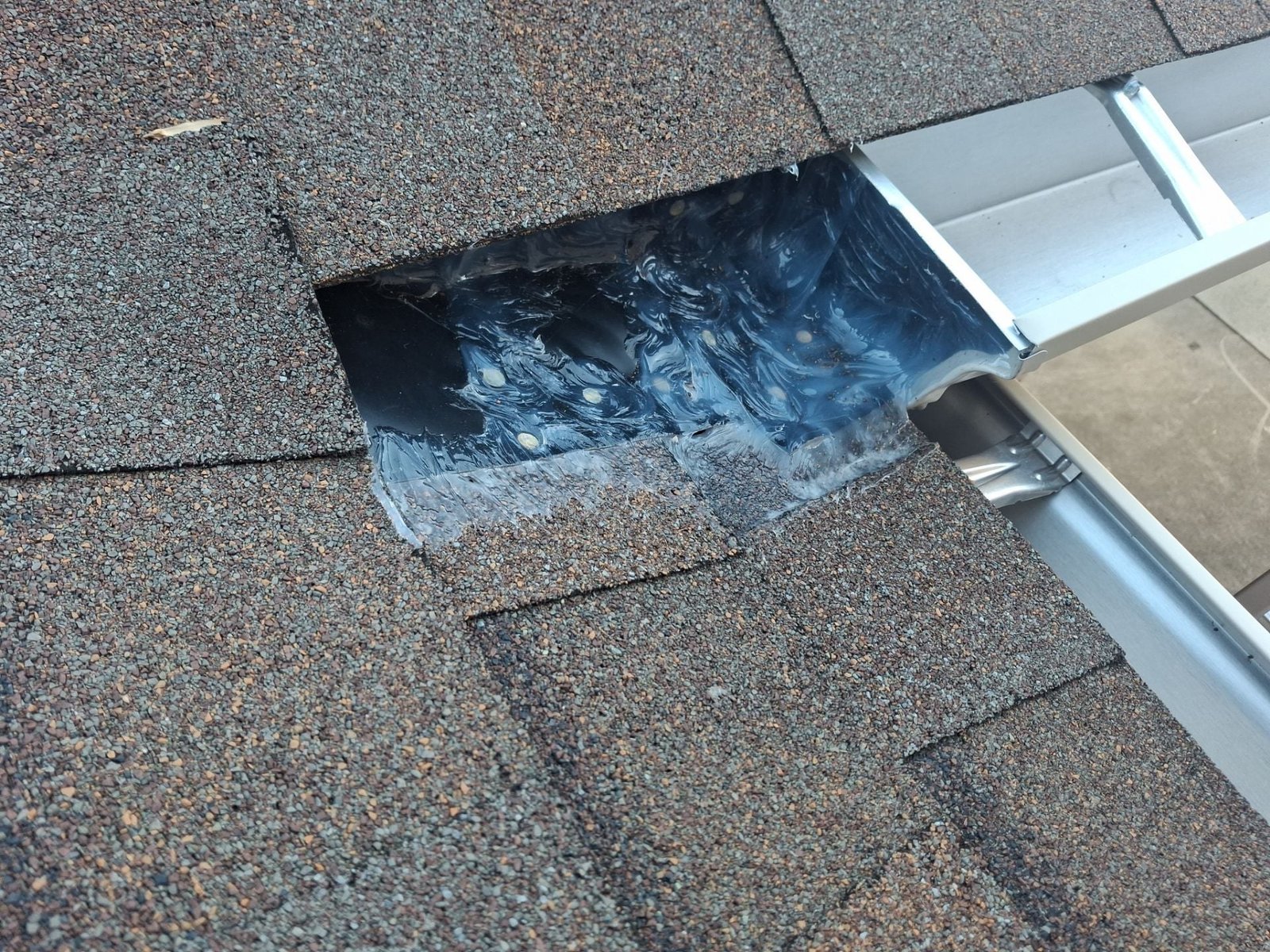
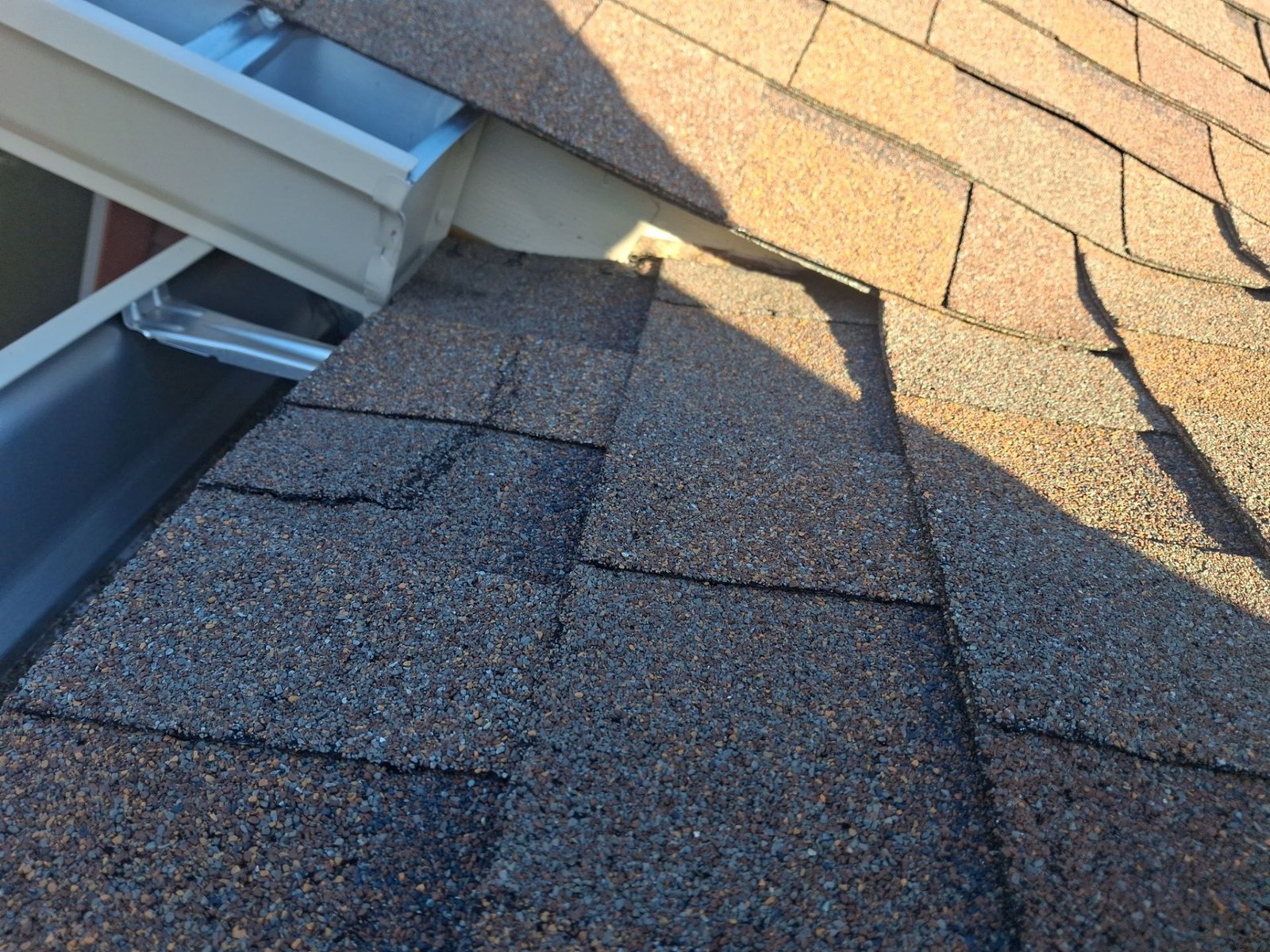
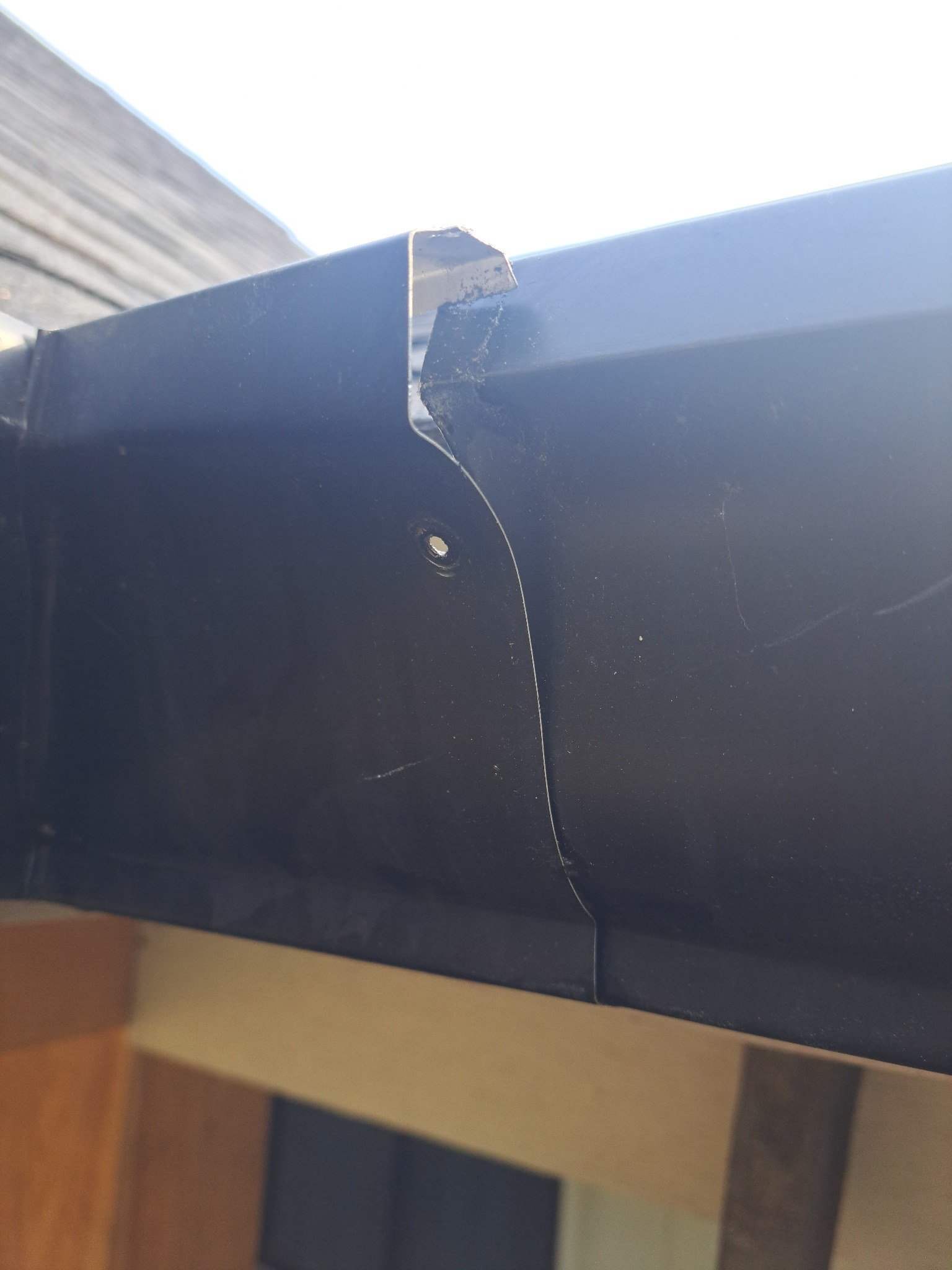
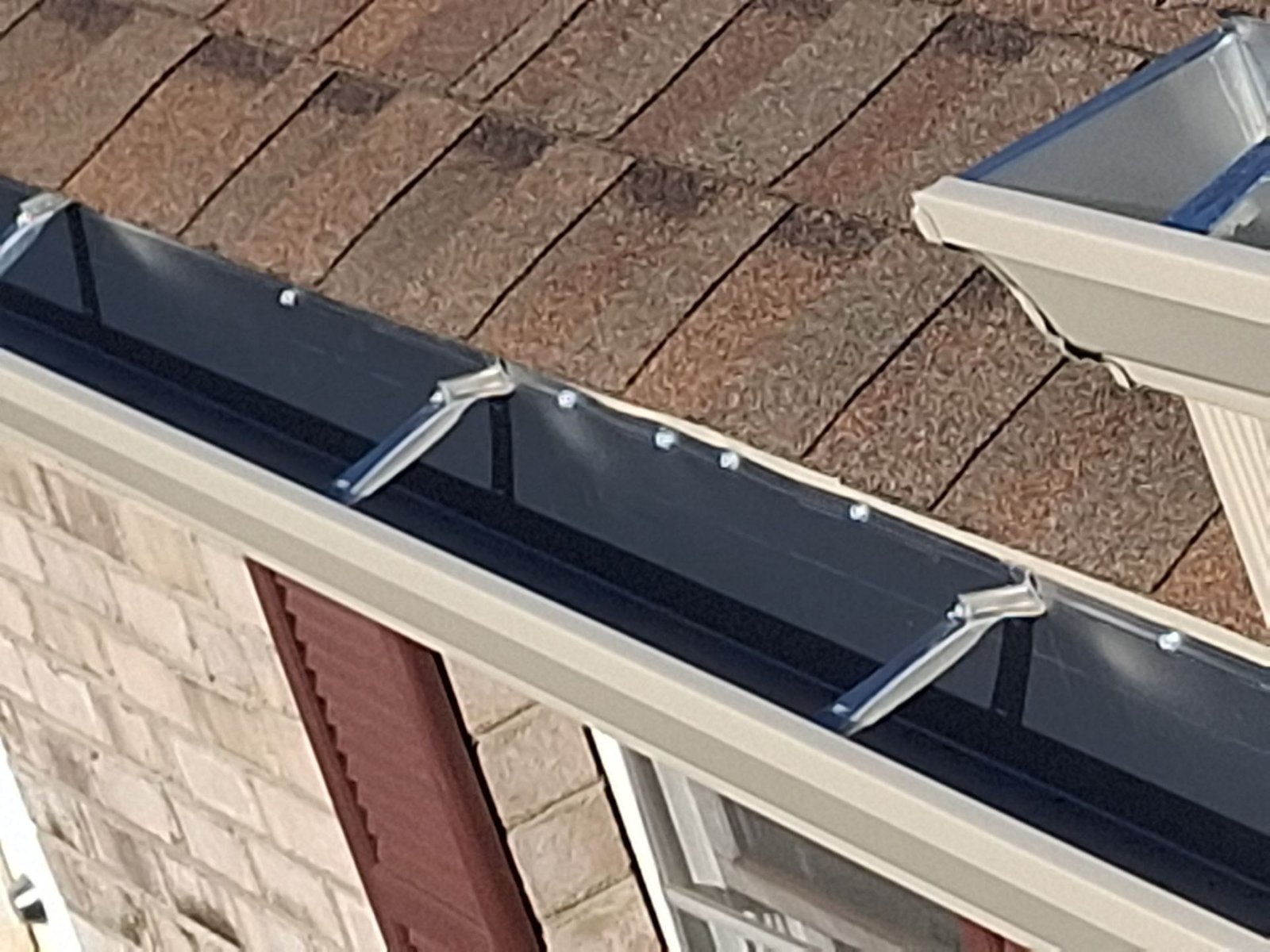
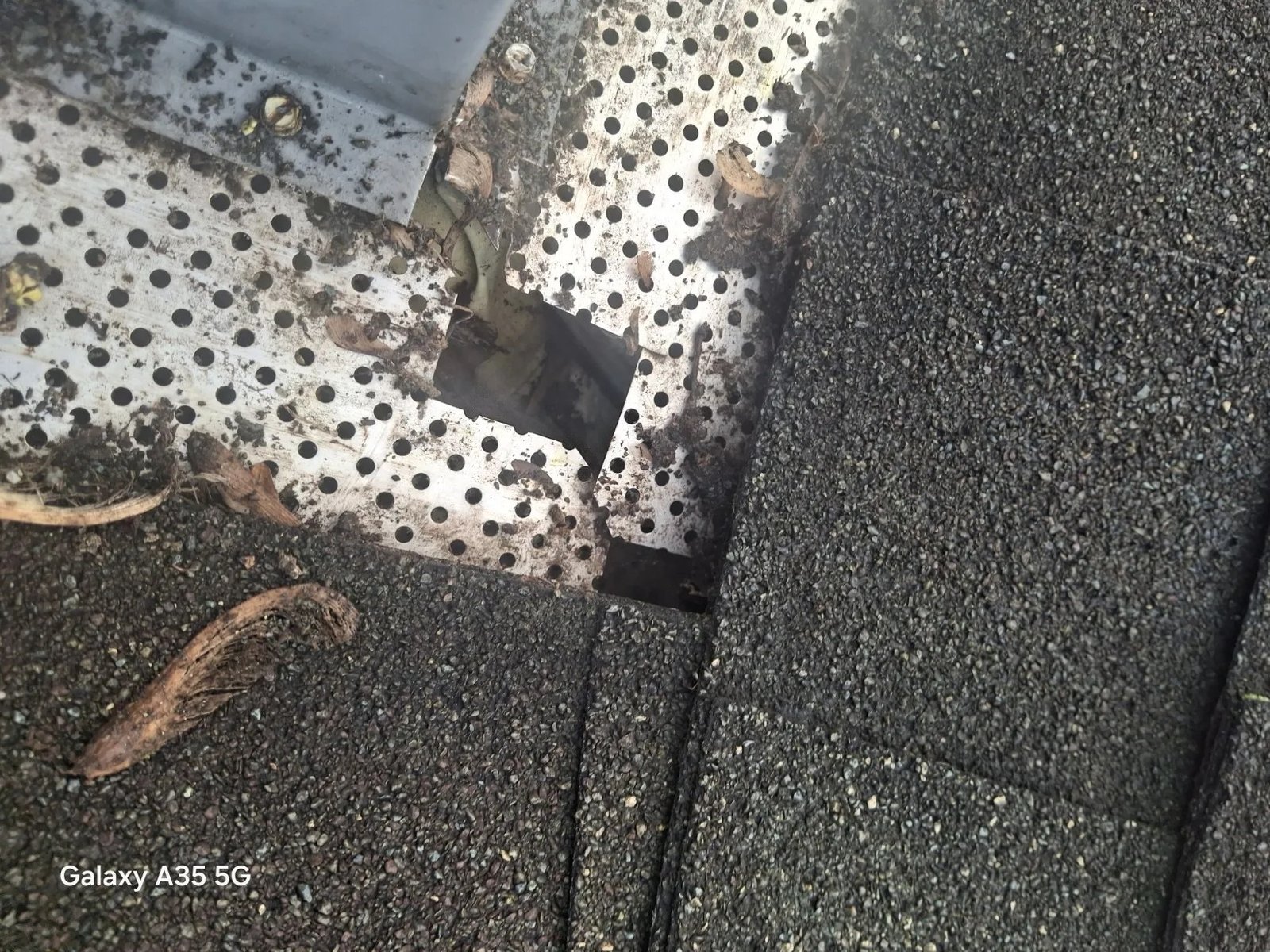
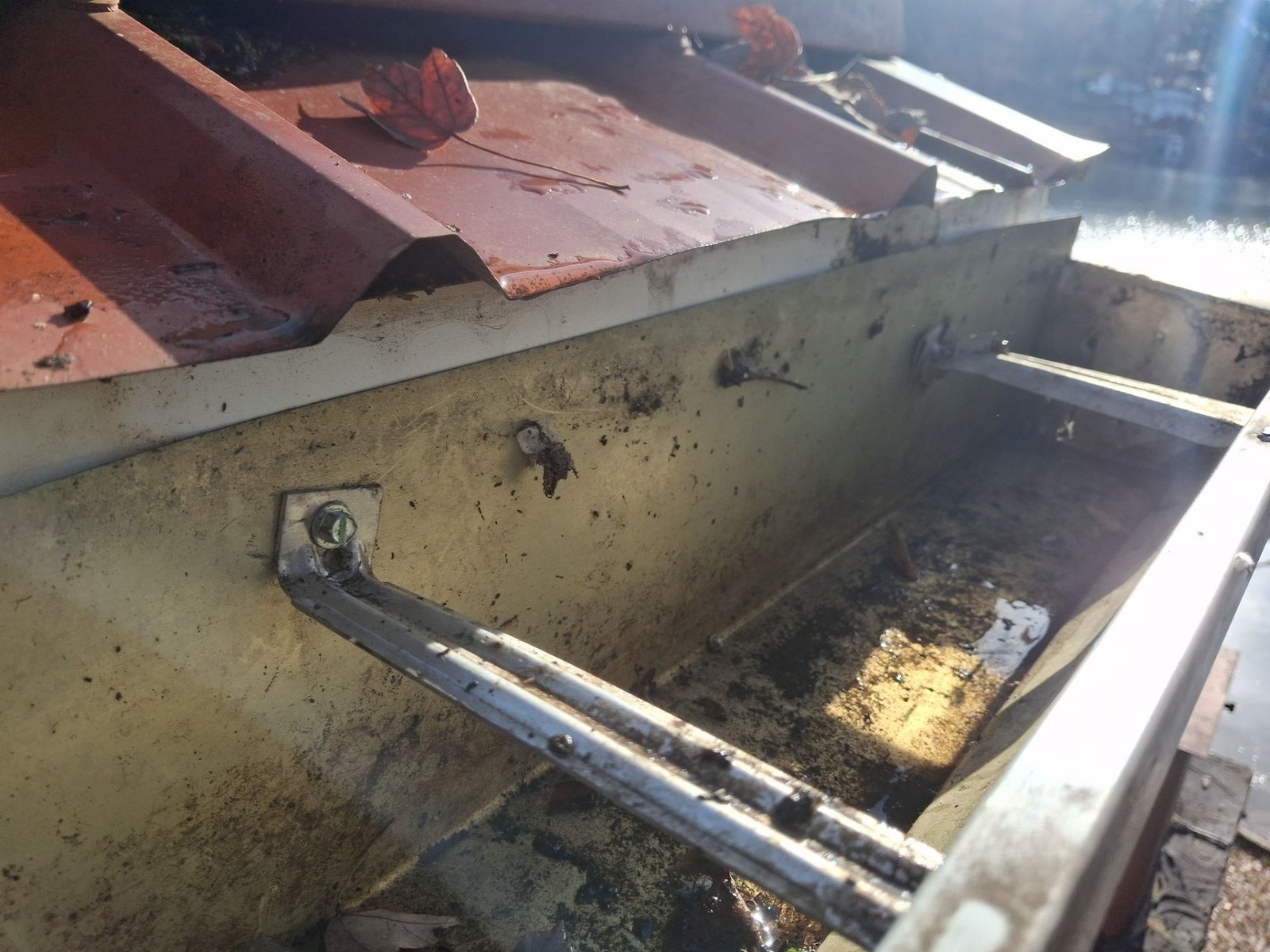
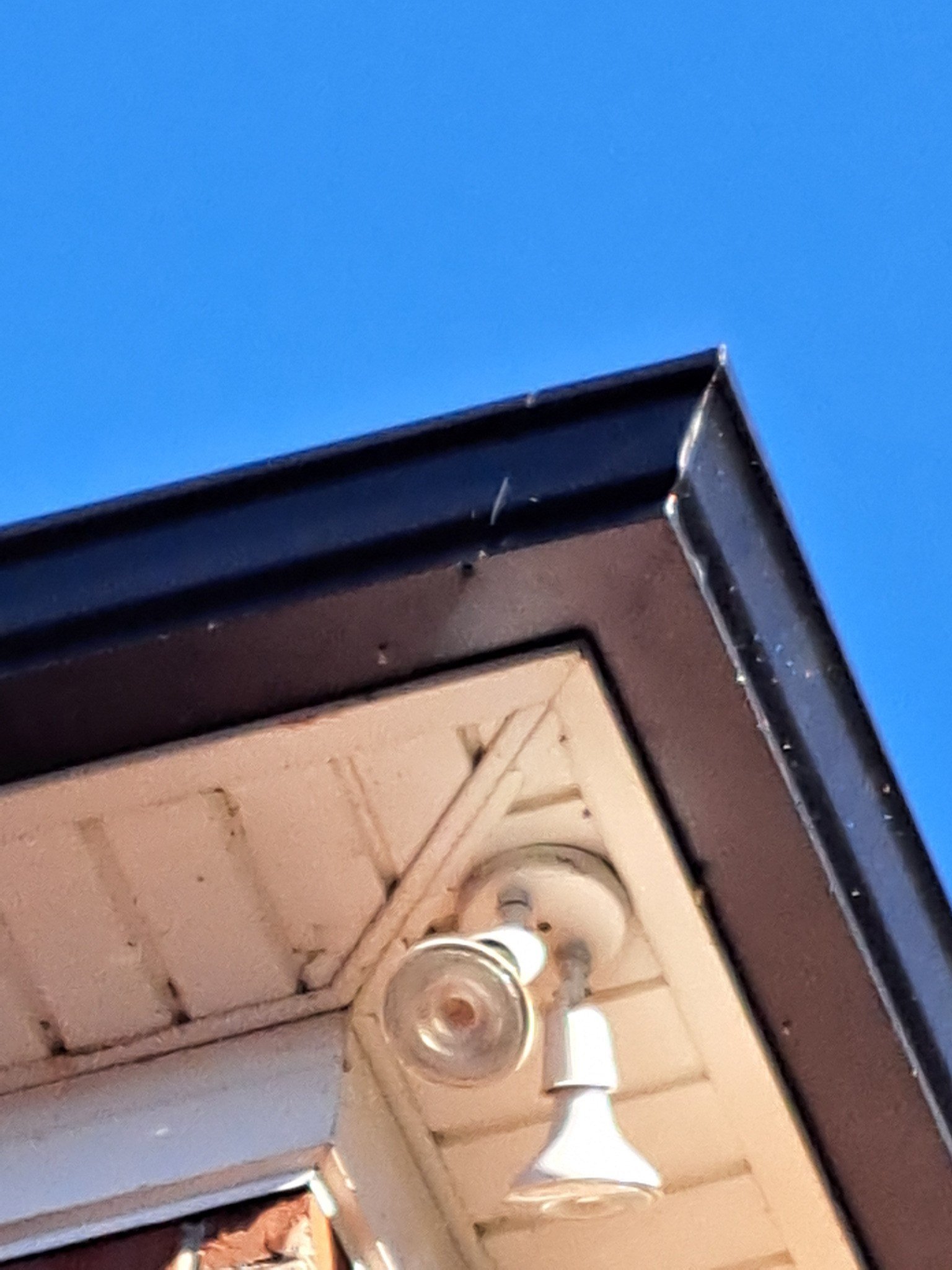
The field examples used with this article are from gutter systems that were not installed by McCloud Gutter. We were called to evaluate or repair the issues shown.
Several of these concerns were documented within six months of the original installation.
These examples are not shared to attack another company. They are shared to show why gutter details matter and why homeowners should look beyond price alone.
This article can also grow over time. As we continue finding examples in the field, we may add more photos showing issues such as downspouts installed backward, gutter overlaps facing the wrong direction, gutters pitched the wrong way, roof penetrations caused by gutter work, gutter sections pushed up into shingles, improperly sealed seams or miters, undersized outlet holes for larger downspouts, hidden hangers not clipped into the gutter lip, gutter guards cut open where debris collects, and water discharge pointed toward problem areas.
These are not small details when water is involved.
Fastener placement matters
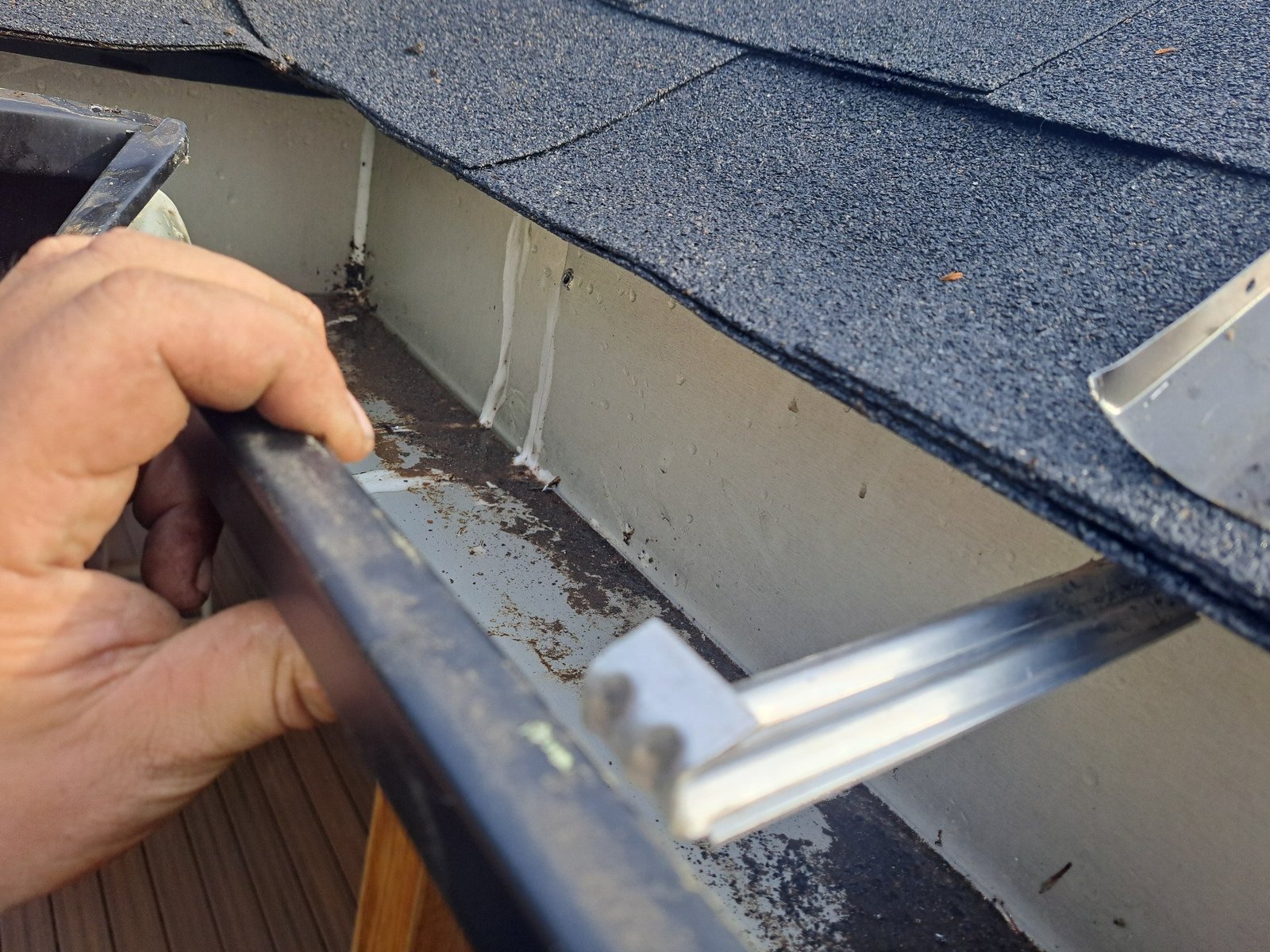
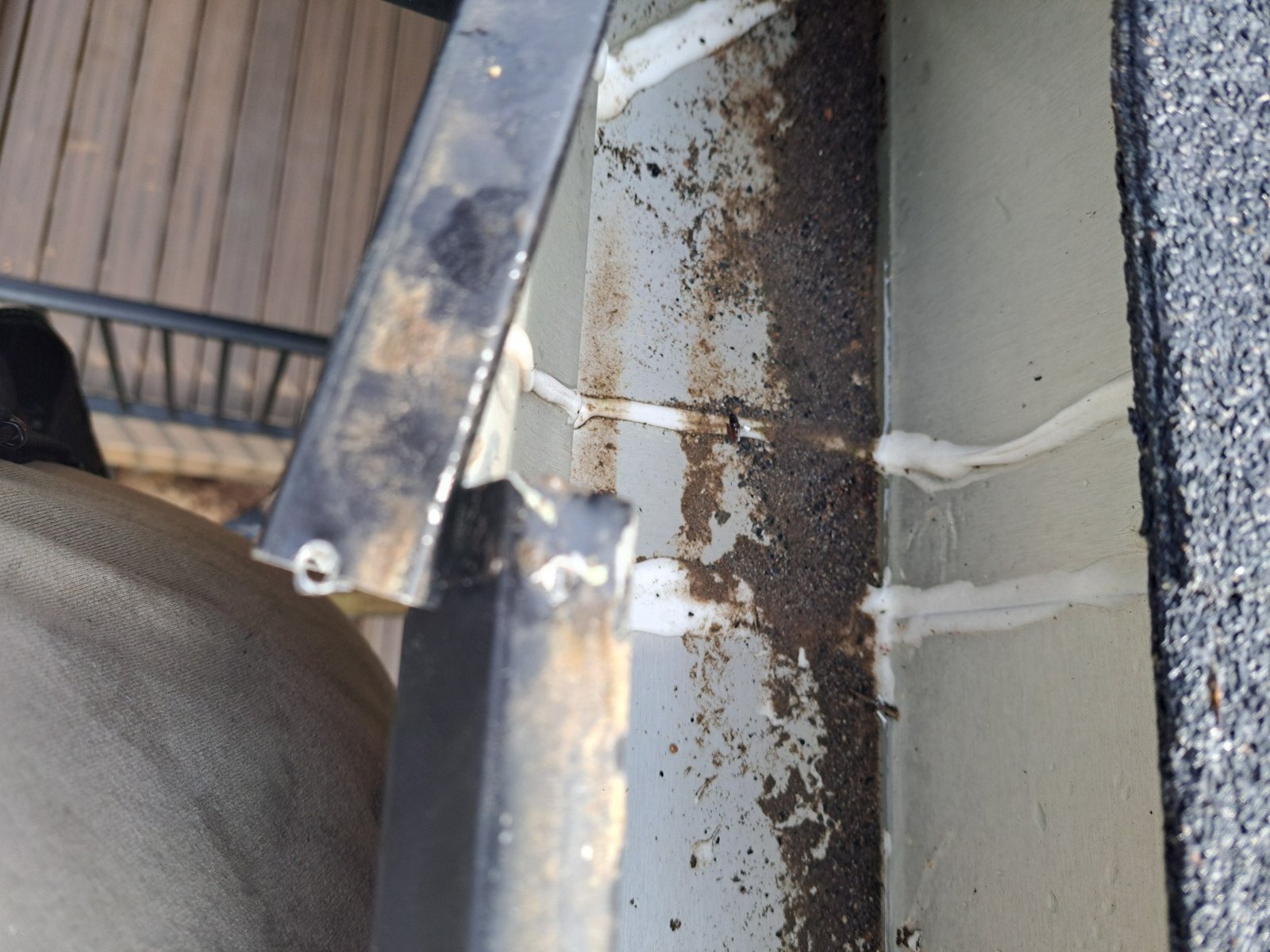
One field example shows hangers screwed halfway down the back of the gutter, at different heights, different angles, and with different types of hangers.
That is not just ugly.
The back of the gutter is part of the water-carrying system. Extra holes in the wrong location can become leak paths behind the gutter. Water behind the gutter can put fascia boards at risk and create problems that may not be visible until damage has already started.
A gutter should carry water inside the trough and move it toward the outlet. It should not be full of unnecessary holes that let water escape behind the system.
Gutter work should not create roof penetrations
Normal gutter installation should not create unnecessary penetrations through roofing, roof decking, roof membrane, shingles, or other roof surfaces.
When a screw is run through gutter material and into the roof area, the roof may now depend on caulk to keep water out. That is a serious concern, especially when the penetration is located where roof water is flowing.
Caulk has its place. But caulk should not be the main long-term defense for a hole that did not need to be there.
Downspouts carry concentrated water
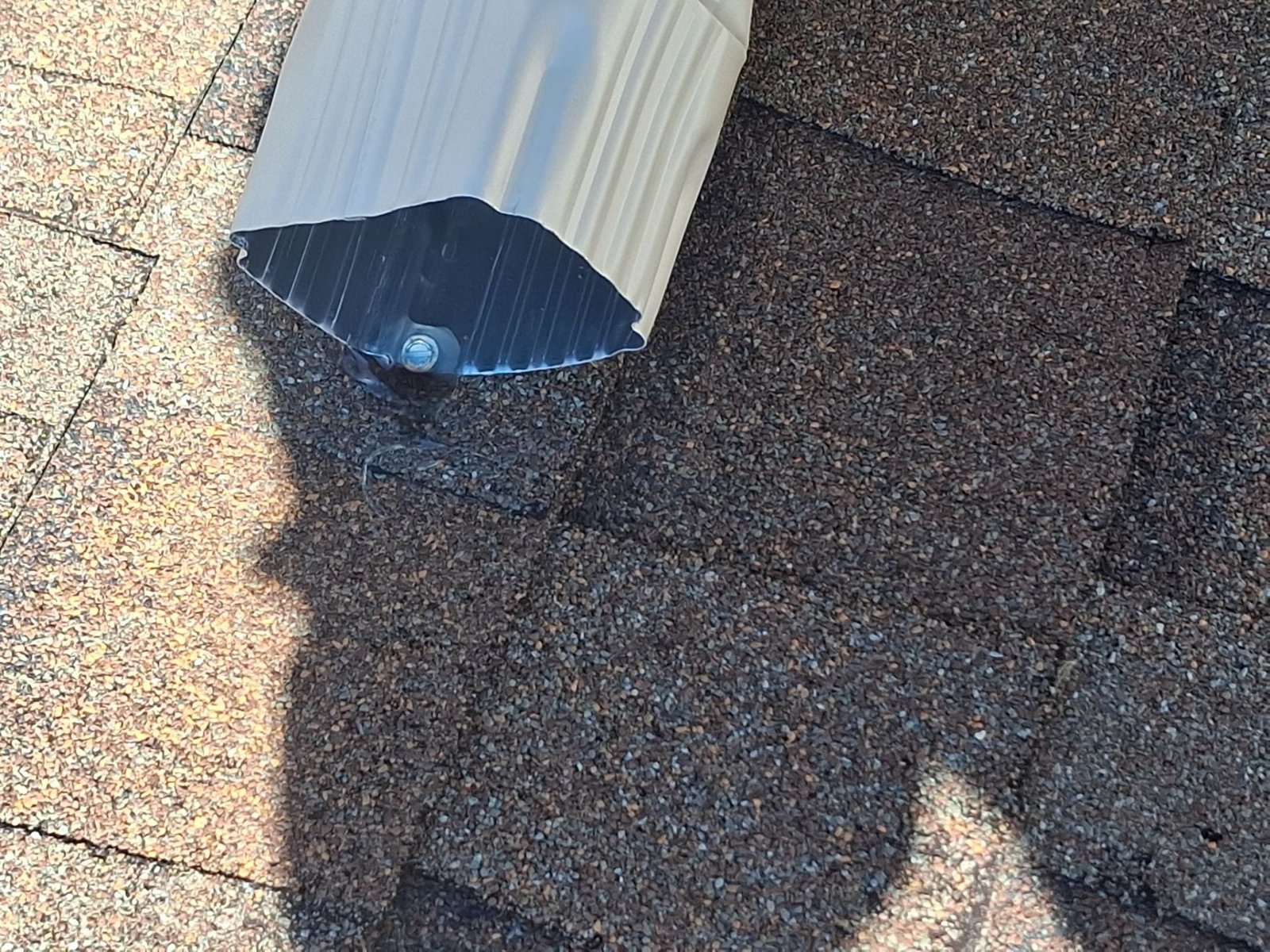
One example shows a screw through the bottom edge of a downspout, covered with caulk, right where water flows.
That is a major water-path concern.
A downspout does not carry a small trickle. It carries concentrated roof water. If a fastener penetrates into the roofing area from inside that water path, any future sealant failure can direct water toward the roof structure.
That should not be treated like a small detail. A downspout should move water away from the roof, not create a risk point inside the flow path.
Caulk is not a water-control plan
Sealant can be useful when it is used correctly. Gutters have seams, miters, end caps, and outlets that need proper sealant. But there is a difference between proper sealing and using caulk as the main plan for controlling water.
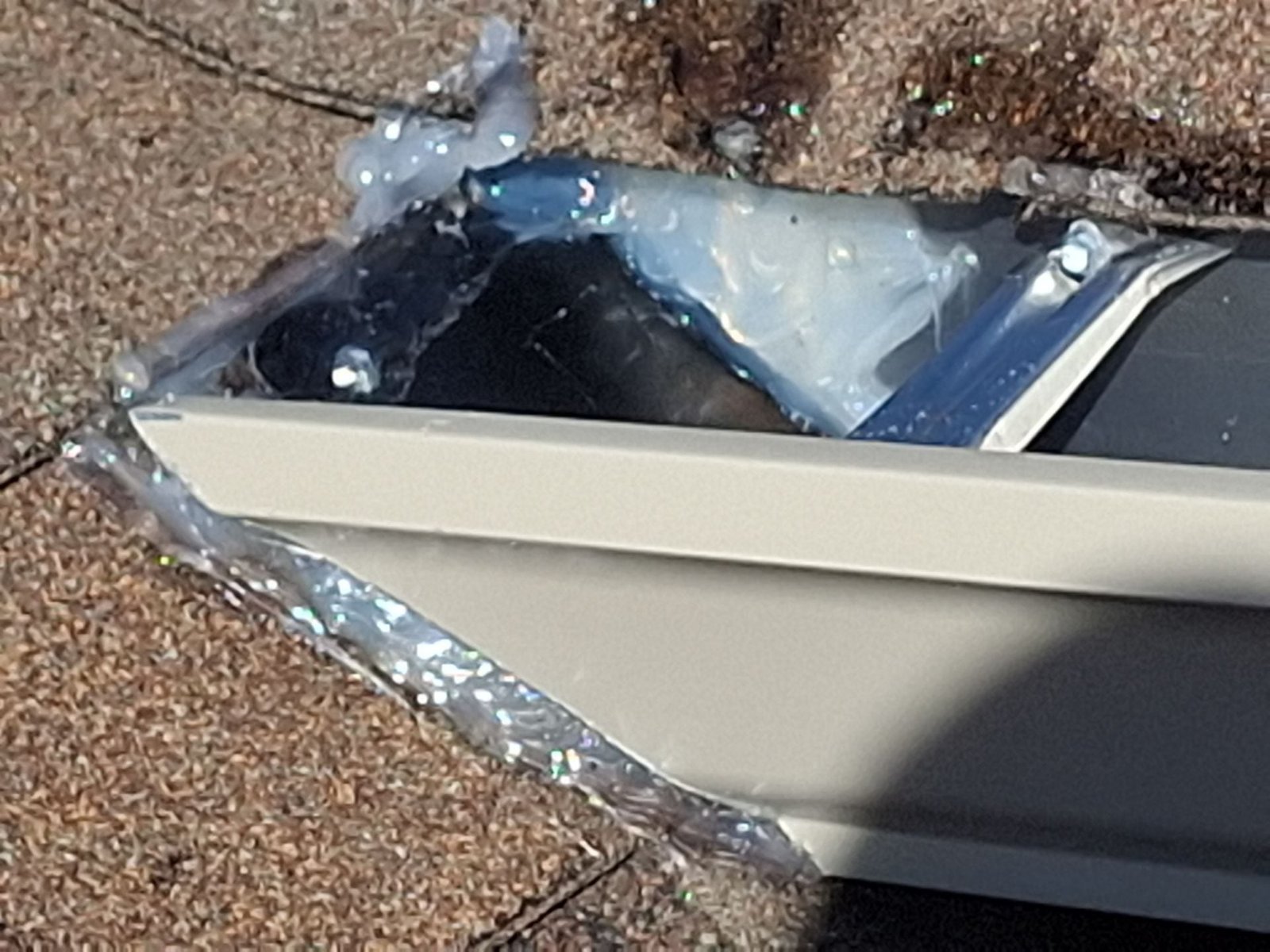
When metal patches, nails, screws, and heavy caulking are used in a way that traps water or blocks natural drainage, the repair can become a water dam.
Once sealant shrinks, cracks, separates, or gets penetrated, water finds the weak point.
Gutters should not be pushed into shingles
A gutter end should not create a water trap at the roof.
When an end cap or gutter section is pushed tight into the shingle area, water coming down the roof can be redirected into places it should not go. It can be pushed back toward fascia, roof decking, or roof materials.
The gutter may look like it is tucked in tight and finished from the ground. But tight is not always right. There still has to be a proper water path.
Seamless gutters should not have avoidable seams
Seamless gutters are meant to reduce unnecessary seams. That is one of the main reasons homeowners buy them.
When a straight gutter run is cut too short, the better fix is usually to remake the piece. Patching in a short section creates an avoidable seam where there did not need to be one.
That may not be the worst problem on a home, but it is a workmanship issue. A mistake should be corrected properly instead of turned into a permanent weak point on the homeowner’s house.
Overlaps need to be long enough and face the right way
Gutter overlaps matter.
A short overlap can become an avoidable leak point. An overlap facing the wrong direction can work against the path of water. The homeowner may never notice it from the ground, but water will notice it.
A small material mistake should not become the homeowner’s long-term maintenance problem.
Hidden hangers have to be installed correctly
Hidden hangers are designed to support the gutter. But they have to be installed correctly.
If the hanger is not clipped into the front lip of the gutter, the front edge may not be supported the way the system was designed. From the ground, the gutter may look installed. Up close, the support detail can be wrong.
That matters because gutters move, expand, contract, hold water, catch debris, and carry weight during storms. Support details matter.
Outlet size has to match the downspout system
A larger downspout does not help as much if the outlet hole feeding it is too small.
For example, a 3x4 downspout is meant to move more water than a 2x3 downspout. But if the outlet opening in the gutter is not sized properly, the system can still bottleneck at the outlet.
That is why gutter size, outlet size, and downspout size need to work together.
A homeowner may be told they are getting larger downspouts, but the real performance depends on the opening feeding that downspout and the way the outlet is installed.
Gutter guards can be defeated by poor installation
Gutter protection is not magic. Even a good gutter guard can perform poorly if it is installed wrong.
One field example shows a covered gutter system with large openings cut into the guard near a high-flow, high-debris area. That defeats the purpose of having gutter protection in the first place.
Corners and valleys are often where the most water and debris collect. Leaving those areas open can let leaves, shingle grit, and debris into the gutter right where protection matters most.
A cheap install can become an expensive repair
The problem with low-quality gutter work is that the true cost often shows up later.
- Water behind the gutter
- Rotting fascia
- Leaking seams
- Roof leaks from unnecessary penetrations
- Roof-edge damage
- Overflow during heavy rain
- Standing water
- Gutter sag
- Wrong-way drainage
- Foundation moisture
- Erosion
- Water over walkways
- Gutter guard failure
- Early repair costs
The homeowner may think they saved money at the time of installation. But if the system has to be repaired, corrected, or replaced, the lower price did not really save money. It delayed the cost.
That is why homeowners should compare more than the price.
Compare the company. Compare the experience. Compare the workmanship. Compare the insurance. Compare the materials. Compare the warranty. Compare whether the installer understands how water actually moves around the home.
What a reputable gutter company should be looking at
A quality gutter company should not only ask, “How many feet of gutter?” They should be looking at the home as a system.
- Roof size
- Roof pitch
- Roof valleys
- Upper roof water discharging onto lower roofs
- Gutter size
- Downspout size
- Outlet size
- Downspout placement
- Where the water discharges
- Fascia condition
- Roofing and shingle position
- Whether the gutter is pushing into shingles
- Whether gutter work would create a roof penetration
- Drip edge or roof-edge conditions
- Hanger spacing
- Hanger engagement
- Fastener placement
- Miters and seams
- Gutter overlaps
- Gutter pitch
- Gutter guard limitations
- Maintenance needs
Gutter work is simple in theory. In the field, it is still easy to mess up when someone does not understand the whole water path.
McCloud Gutter’s approach
McCloud Gutter does not treat gutter work like a quick strip of metal on the edge of a roof.
We look at the home, the roof, the water flow, the downspout locations, the fascia, the roof details, the valleys, the gutter size, and the long-term performance of the system.
We are not always the cheapest quote. We are not trying to be.
Our goal is to install a gutter system that makes sense for the home, protects the property, and avoids creating new problems.
That means paying attention to gutter size, downspout size, outlet placement, roof valleys, discharge points, hanger placement, fastener location, seams, overlaps, sealant, gutter guard details, and workmanship.
Because gutters are not “just gutters.”
They are part of the home’s water-control system. And when they are done wrong, the homeowner is the one who pays for it.
Before you hire a gutter company
A gutter system may look simple from the ground, but the details matter.
Before hiring a gutter company, ask more than “How much?”
Ask who is doing the work. Ask how long they have been doing it. Ask if they are insured. Ask what size gutters and downspouts they recommend and why. Ask whether the outlet size matches the downspout size. Ask how they handle valleys and upper roof water. Ask how they avoid roof penetrations. Ask how they handle gutter pitch. Ask what happens if there is a workmanship issue later.
The cheapest gutter quote is not always the best value.
A properly installed gutter system should protect the home, not create new water problems.
McCloud Gutter installs seamless gutter systems, downspouts, gutter protection, repairs, and cleaning across Burke, Caldwell, Catawba, and surrounding foothills communities.
Field Example Photos
These gutter systems were not installed by McCloud Gutter. McCloud Gutter was called to evaluate or repair the issues shown. Several examples were documented within six months of the original installation.
P01. Fastener placement matters. Random holes through the back of the gutter can create leak paths behind the system. P02. A gutter system should move water away from the roof, not create a new roof penetration that depends on caulk to stay watertight. P03. A downspout carries concentrated water. A penetration inside that water path creates unnecessary risk. P04. Caulk should not be the main plan for controlling roof water. Roof and gutter details need to shed water, not trap it. P05. A gutter should not trap water against shingles or push water back toward the fascia and roof structure. P06. Extra fasteners and patchwork can be a sign of a larger roof-edge problem that should be evaluated, not hidden. P07. A seamless gutter should not get an avoidable seam because the piece was cut short. P08. A small mistake should be corrected properly, not turned into a future leak point. P09. Even when a gutter looks finished from the ground, hidden hanger details still matter. P10. Seams, overlaps, and hanger engagement all matter on a gutter system. P11. A gutter guard cannot do its job if the most important debris area is left open.Sources and research notes
- N.C. Cooperative Extension — Caldwell County Center — Local Caldwell County source for the statement that a 1-inch rainfall event on a 1,000-square-foot rooftop can produce about 623 gallons of water.
- North Carolina Department of Environmental Quality — Rainwater Harvesting — Statewide North Carolina source for the rule of thumb that 1 inch of rain can produce about 600 gallons per 1,000 square feet of roof.
- Building Science Education — Foundation Drain, Gutters, Downspouts — Building-science support that roof runoff should be drained away from the home because roof water can saturate soil around the foundation and wick through the foundation.
- Building Science Education — Stormwater, Gutters, Downspouts — Building-science support that roof runoff can be several thousand gallons and should be channeled away from foundations, basements, and crawlspaces.
- International Residential Code — Section R401.3 Drainage — Code reference for the broader drainage principle that lots shall be graded to drain surface water away from foundation walls.
- SMACNA Downspout & Gutter Sizing Calculator — Industry source showing that gutter/downspout sizing considers rainfall intensity, roof design area, gutter section length, number of downspouts, and gutter proportions.